
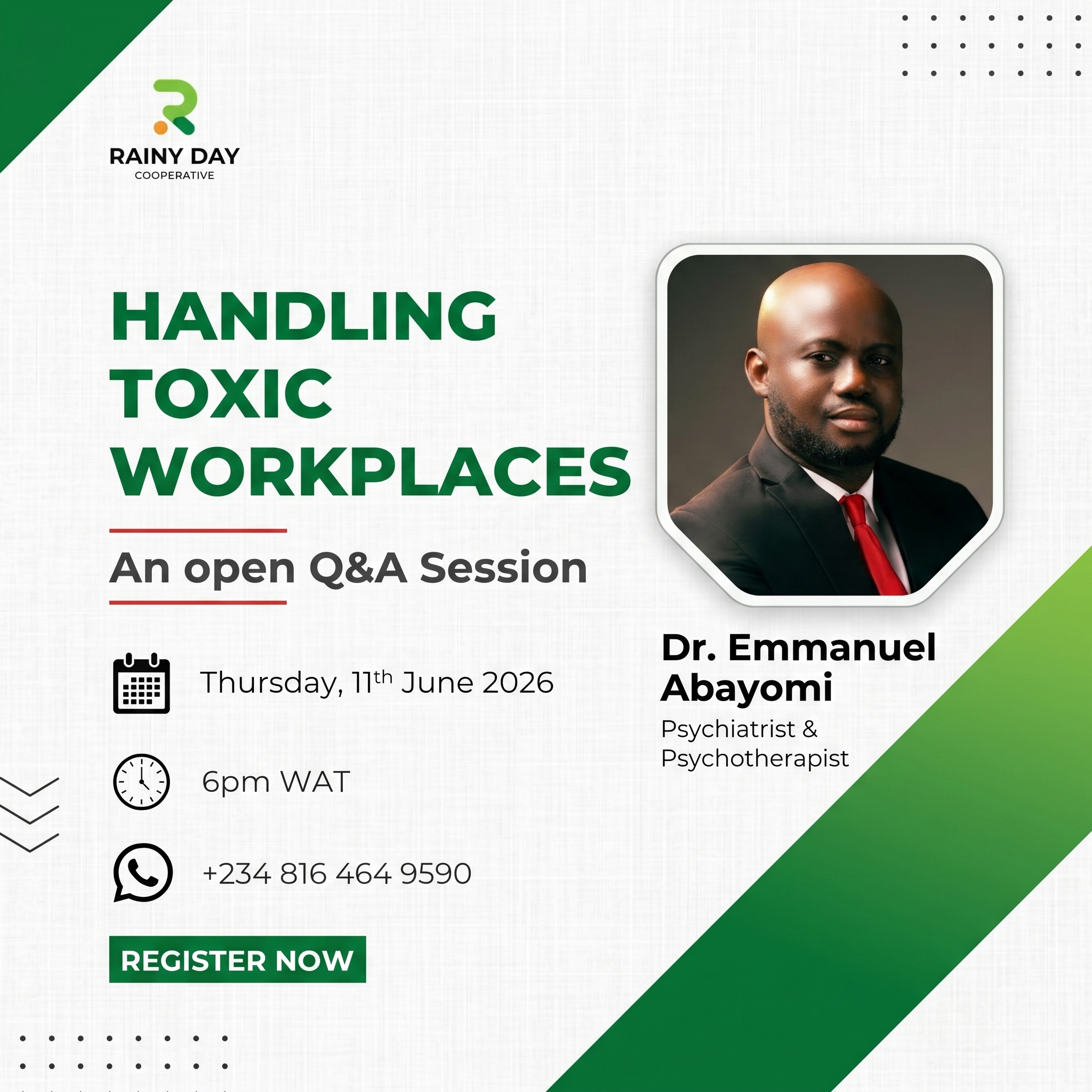
Navigating the Storm: Surviving and Thriving in Toxic Workplaces
Toxic work culture is a pervasive reality in the modern professional landscape, affecting millions globally. In a recent session hosted by the Rainy Day Cooperative Society, Dr. Emmanuel Abayomi, a psychiatrist and psychotherapist, shared profound insights into identifying, managing, and eventually overcoming the mental and emotional toll of a toxic workplace.
The Alarming Reality of Workplace Toxicity
The statistics surrounding workplace toxicity are sobering:
- Prevalence: Three out of four employees have experienced a toxic workplace.
- Retention: Over half of employees (54%) report quitting a job specifically due to toxicity.
- Health Impact: Approximately 60% of individuals experience health-related injuries or issues stemming from their work environment.
- Burnout: In the UK, 73% of employees suffer from burnout primarily due to toxic cultures.
Recognizing the Signs
Toxicity isn’t always overt; it often manifests in subtle, recurring patterns. Key indicators include:
- Poor Boundaries: Lack of work-life balance, such as unrealistic deadlines or being expected to meet with leadership late at night.
- Negative Communication: Persistent gossiping, unprofessional communication, and the silent treatment from management.
- Leadership Issues: Micromanagement, abusive leadership, and favoritism or “office politics”.
- Lack of Safety: A workplace devoid of psychological safety where personal information shared in confidence is used against you.
The Mental Health Toll
Toxic environments can lead to devastating mental health consequences, including:
- Panic and Anxiety: Unrealistic expectations can trigger physical symptoms like chest tightness, dizziness, and racing hearts.
- Depression: Constant unfavorable comparisons and being made to feel “worthless” can lead to a loss of energy, poor concentration, and clinical depression.
- Unhealthy Coping: Some individuals turn to alcohol or substance abuse to “detoxify” or numb the stress of their work day.
The Path Forward: The AITS Framework
Dr. Abayomi introduced the AITS framework as a guide for those currently in or entering a workplace:
- Avoidance (and Recognition): If possible, recognize toxic traits before joining an organization. Research turnover rates and talk to current employees.
- Interrupt the Process: If you are already in a toxic environment, find ways to interrupt the cycle of stress. This can involve setting boundaries, seeking professional help, or eventually quitting.
- The Matrix of Values:
- Reconnect with Values: Identify what truly matters to you—be it independence, creativity, or family. Using your values as a guidepost helps decide which jobs to accept and which to walk away from.
- Identify Internal Obstacles: Be aware of the thoughts (e.g., “I’m not good enough”) and memories that keep you stuck in a toxic situation.
- Sustainably Helpful Actions: Shift from “survival mode” (flight, fight, freeze, or fawn) to actions aligned with your values, such as personal development and effective communication.
Practical “First Aid” for Chronic Toxicity
For immediate relief, Dr. Abayomi suggests a Mindfulness Exercise to ground yourself when overwhelmed:
- Notice Your Body: Focus on your physical self and your breath.
- Notice Your Internal World: Acknowledge your thoughts, images, memories, emotions, and sensations (TIMES) without letting them control you.
- Notice Your External Environment: Observe the objects around you to create a “distance” between yourself and your stressful thoughts.
Conclusion
While toxic workplaces are common, you do not have to drink from that “poison stream”. By connecting with your values, being gentle with yourself, and communicating—whether with HR, mentors, or mental health professionals—you can protect your well-being and find a path toward a healthier professional life.