
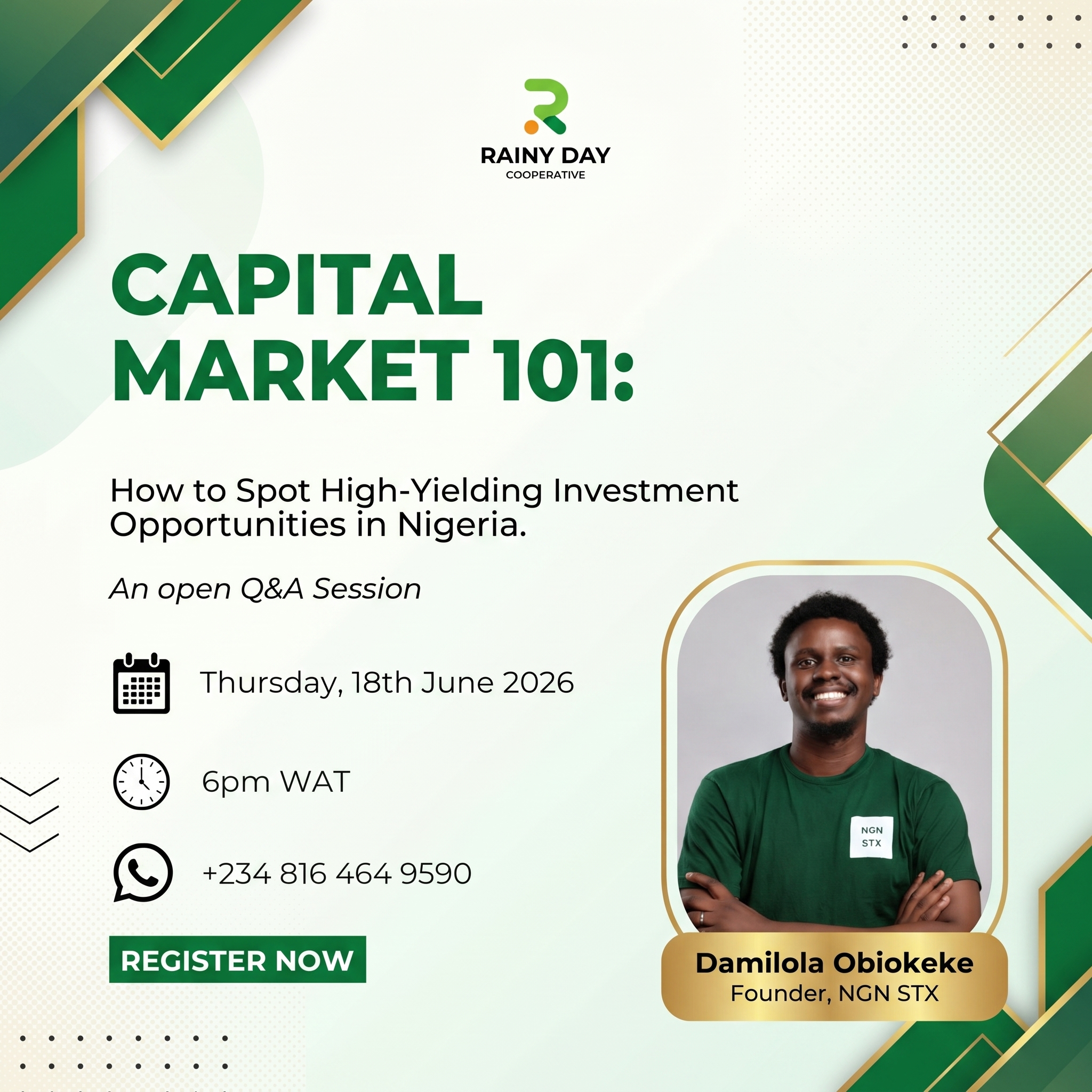
Navigating the Nigerian Stock Market: A Guide to High-Yielding Opportunities
In a recent Q&A session hosted by the Rainyday Cooperative Society, experts and investors gathered to discuss a crucial question for many Nigerians: How do you spot high-yielding investment opportunities in the Nigerian stock market while avoiding the pitfalls of the past?
The session, led by Rainyday Cooperative President Olufunso Akinsanya and featuring chartered stockbroker Daniel Damilola Obiokeke, offered a deep dive into the mechanics of the Nigerian Exchange (NGX) and the mindset required for successful long-term investing.
Understanding Yield in the Nigerian Context
To navigate the market, one must first understand what “yield” truly means. Obiokeke defines yield simply as the return an asset pays you for holding it. In Nigeria, a common benchmark for “high yield” is anything that exceeds the average treasury bill rate, which is currently around 16%.
While high yields exist across various asset classes—including bonds, treasury bills, commercial papers, and money market funds—the equities market (stocks) offers some of the most significant opportunities for growth, provided investors know where to look.
How to Spot Legitimate High-Yield Investments
Obiokeke shared several critical markers for identifying strong investment opportunities on the NGX:
- Real Economic Activity: Look for companies with tangible products or services you see and use every day, such as Nestle, Dangote Cement, or local banks.
- Regulation and Registration: Stick to entities registered with the Securities and Exchange Commission (SEC) and regulated by bodies like the Central Bank of Nigeria (CBN) or the Nigerian Communications Commission (NCC). Regulation is your best friend in finance.
- Transparency and Reporting: Timely financial reporting is a non-negotiable. If a company is inconsistent or evasive with its bookkeeping, it’s a major red flag.
- Collateral and Assets: Invest in companies backed by real assets or strong market positions (a “moat”) that can survive economic shifts.
- Expansion Plans: High-yielding companies often have clear, visible plans for growth and expansion.
Lessons from History: 2008 and Beyond
A recurring theme in the discussion was the trauma of the 2008 stock market crash, which left many Nigerian families skeptical of investing. Participants noted that while regulations have improved significantly to prevent insider dealings and improve disclosures, the market still faces challenges with uninformed retail investors and “hype-driven” cycles.
The speakers emphasized that the best protection against a repeat of the past is education and due diligence.
Advice for the Modern Investor
For those looking to enter or re-enter the Nigerian stock market, the session offered several actionable tips:
- Beware of “Penny” and “Illiquid” Stocks: Just because a stock is cheap (e.g., 1 Naira) doesn’t mean it’s a bargain; there is often a reason for the low price. Similarly, avoid illiquid stocks that you cannot easily sell when you need to exit.
- Adopt an “Owner” Mindset: Don’t just look at charts; ask yourself if you would want to own the business itself based on its profitability and leadership.
- Avoid the “Sharp-Sharp” Trap: High yield is often a reward for risk and, more importantly, waiting. Sustained yield over time almost always beats chasing short-term trends or influencer-hyped “news.”
- Invest as a Collective: Consider joining investment syndicates or cooperatives like Rainyday to leverage collective strength and access better information.
Final Thoughts
The Nigerian stock market remains a viable path for building passive income and long-term wealth. However, success requires moving beyond fear and skepticism toward informed, rational decision-making. As President Akinsanya noted, “Everything has a risk, but not everything is risky.” Training and information are what bridge that gap.