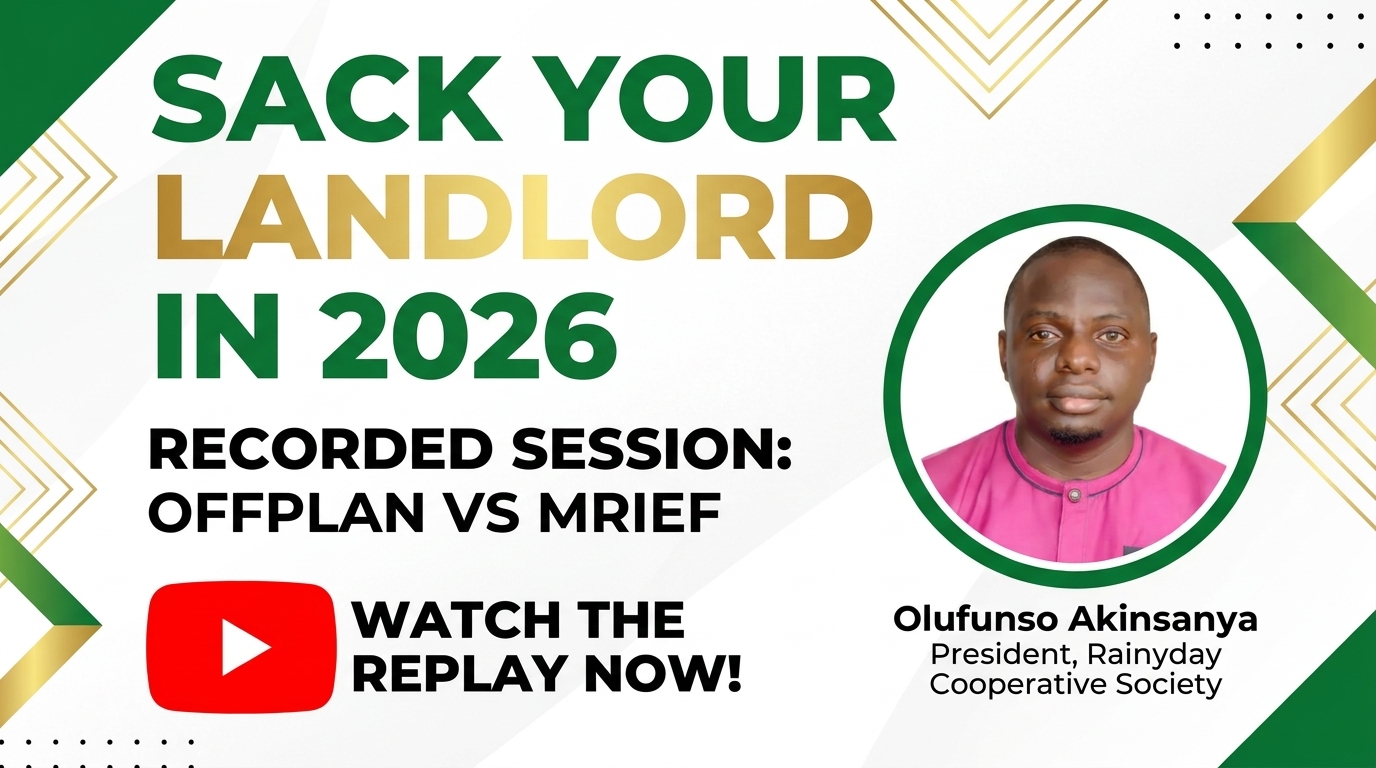
Sack Your Landlord: Navigating Home Ownership in 2026
For many, becoming a homeowner or landlord is a primary life goal, whether it is for a first residence, a gift for a child, or a long-term investment. In a recent Q&A session, Olufunso Akinsanya explored the current landscape of the Nigerian housing market, comparing government initiatives like the National Mortgage Registry (NMRI) with off-plan development strategies.
The Challenges of the Current Market
Achieving home ownership in 2026 comes with significant economic hurdles:
- High Interest Rates: The Central Bank’s monetary policy rate sits at 26.5%, though commercial bank rates for developers can reach nearly 40%.
- Inflationary Pressures: The cost of essential materials like cement has increased sixfold since 2020, rising from approximately 3,000 Naira to between 14,000 and 15,000 Naira.
- Currency Fluctuations: Even locally manufactured goods often have a “dollar component” due to imported equipment and fuel costs, directly impacting final house prices.
NMRI vs. Off-Plan Projects
While the government’s NMRI program is a commendable initiative, it has limitations that prospective buyers should consider.
| Feature | NMRI Program | Off-Plan Projects |
|---|---|---|
| Eligibility | Requires completed buildings with existing titles (C of O). | Allows entry at the earliest stages of construction. |
| Cost | Often higher due to the developer’s accumulated financing interest. | Typically offered at a 30% to 50% discount compared to finished value. |
| Customization | Very limited; buyers often pay twice to renovate finished homes to their taste. | High; buyers can choose specific fittings, tiles, and finishes during construction. |
| Availability | Limited number of projects meet all strict legal and completion requirements. | Wider range of opportunities for those willing to wait for construction. |
The Rainyday Approach: Simple and Accountable
To mitigate common risks associated with off-plan developments—such as developer oversight and lack of accountability—Rainyday Cooperative utilizes a community-driven model.
- Simplification: The project focuses on bungalows because they are easier to build, have fewer regulatory hurdles, and are less prone to complex structural errors.
- Transparency: All accounts are subject to regulatory audits through the Lagos State Cooperative Framework.
- Speed: By choosing simpler designs, the team can complete projects faster, helping members beat inflation by buying materials like cement and blocks in bulk before prices rise further.
Whether you are looking for your primary residence or a secondary home near Lagos, understanding these financing and construction models is the first step toward “sacking your landlord” by 2026.