Navigating the Risky Waters of Agricultural Investment: Lessons from the Rainy Day Cooperative Q&A
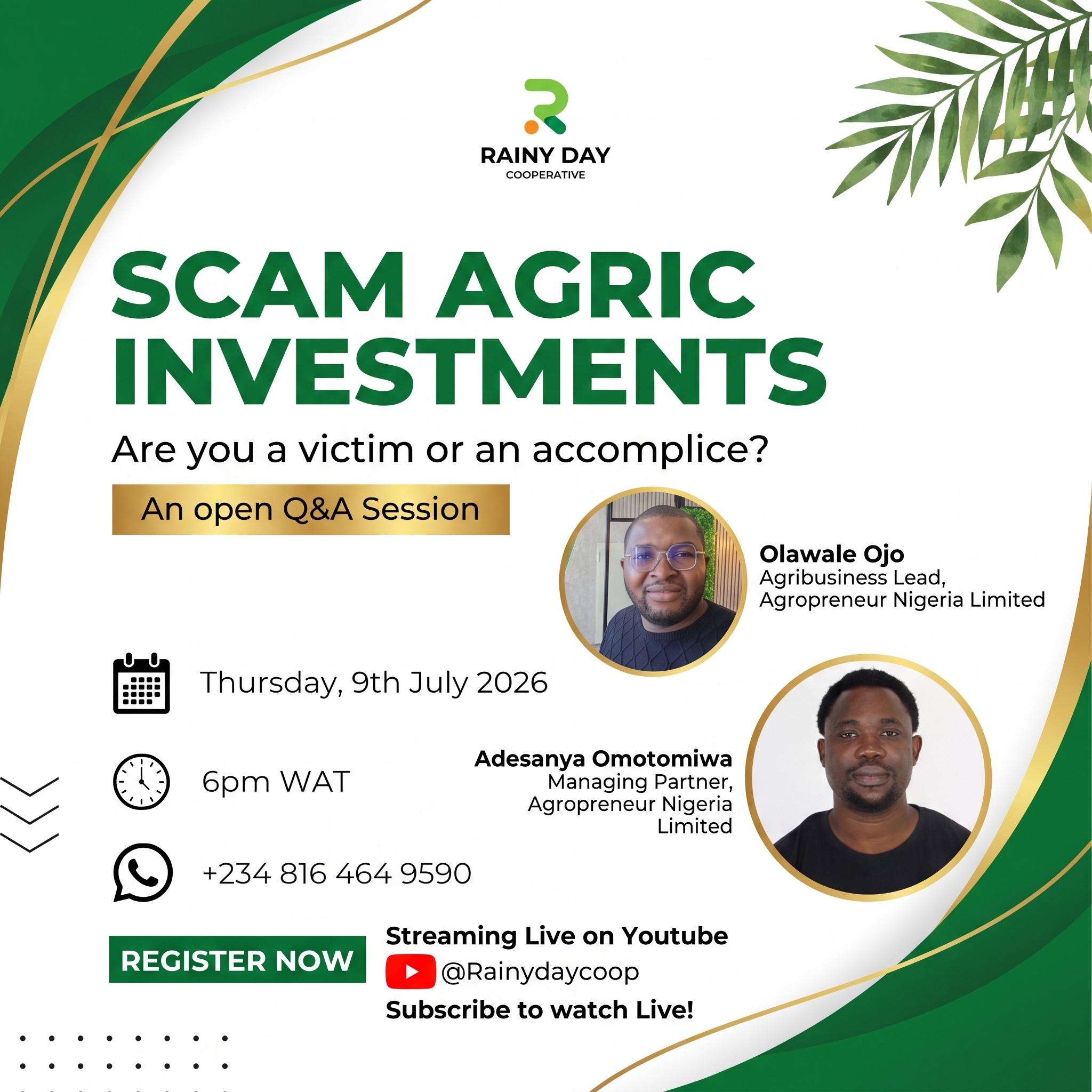
Agricultural investment in Nigeria has recently been a rollercoaster of high-profile successes and devastating “scams” that have left many cautious. To help investors separate genuine opportunities from fraudulent schemes, the Rainyday Cooperative Society hosted a deep-dive session featuring agricultural experts Adesanya Omotomiwa and Olawale Ojo from Agropreneur Nigeria Limited.
Here are the critical takeaways for anyone looking to grow their wealth through agriculture without becoming a victim or an unwitting accomplice.
Victim or Accomplice? Understanding the Dynamic
The session highlights a thin line between being a victim and an accomplice in failed schemes:
- The Victim: Someone without prior knowledge of these schemes who is deceived into investing based on false promises.
- The Accomplice: A former victim who, in an attempt to recover their own funds, begins recruiting others into the same failing investment. Greed can also make one an enabler; demanding unrealistic returns (like 50% or 60%) often pushes even legitimate businesses into unsustainable territory.
Red Flags: When to Walk Away
Agricultural production in Nigeria is inherently risky due to its seasonal nature and unpredictable market factors. Watch out for these warning signs:
- Unrealistic ROI: Promises of 30% to 50% returns on short-term crops like maize or poultry are often red flags.
- Production-Heavy Offers: Most failed schemes focus on the production stage (planting), which carries the highest risk from weather, pests, and disease. Risk generally decreases further down the value chain in areas like processing, warehousing, or retail.
- Lack of Physicality: Always verify if the company has a physical office and actual farms. Legitimate experts should be able to provide precise locations and even timestamped, geotagged photos of their operations.
The Truth About Insurance
A common misconception is that “fully insured” means an investor’s capital is protected. In reality:
- Asset vs. Investment: Insurance typically covers the farm’s physical assets—the crops or livestock—against “acts of God” like flooding or disease.
- Payouts: If a loss occurs, the insurance payout goes to the company, not directly to the individual investor. It does not usually guarantee your return on investment (ROI) or the return of your initial capital.
The “Cobweb Theory” and Market Reality
Agriculture is plagued by the “Cobweb Theory,” where high prices one year lead to a surplus of farmers planting the same crop the next, eventually crashing the price. For example:
- The Maize Cycle: Massive price spikes in 2024 led many to plant maize in 2025, but a sudden government policy to import grains crashed prices, leaving many farmers unable to even break even.
- Yield Gaps: Nigeria faces a significant “yield problem.” While global averages for maize are around 4 tons per hectare, Nigeria averages only 1.5 tons.
How to Invest Safely
Before committing your hard-earned money, follow these steps:
- Verify the Leadership: Research the founders’ track records and integrity.
- Understand the Capital: Be wary of businesses using short-term high-interest debt for projects that actually require long-term equity.
- Check Regulation: Ensure the platform is registered with appropriate bodies like the SEC, especially if they are crowdfunding publicly.
- Know Your Appetite: If you cannot stomach the risk of a bad harvest or a policy shift, consider low-risk options like government treasury bills or bonds.
Final Thought: Food security is vital, and agriculture remains a necessary investment. By demanding transparency, realistic expectations, and proper oversight, we can build an agricultural sector that benefits both the entrepreneur and the investor.
Watch the full session below: