
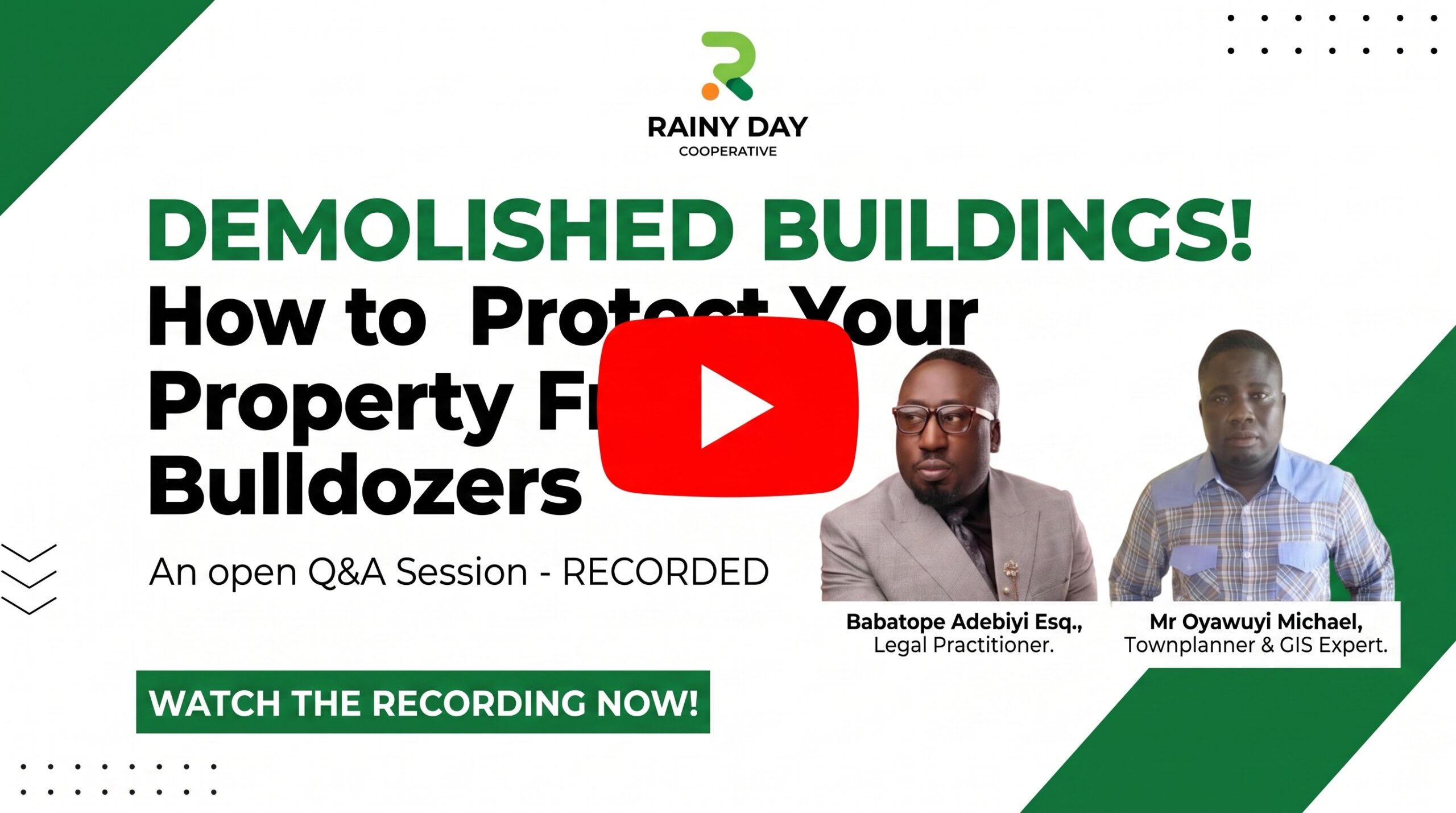
Protecting Your Property from Government Bulldozers: A Comprehensive Guide for Developers and Homeowners
Real estate and housing are fundamental to building lasting wealth. However, across major urban hubs like Lagos and Abuja, property demolition remains a recurring nightmare for developers and homeowners alike. Every few years, headlines report massive demolition exercises by state governments or federal development control agencies.
While it is easy to blame the authorities, a closer look reveals that many of these issues stem from avoidable mistakes made during land acquisition and development. To help unpack this critical issue, experts from the Rainy Day Cooperative live session—including a town planner and a certified land surveyor—shared invaluable insights into why buildings get demolished and how you can safeguard your investments.
Why Do Buildings Get Demolished?
Governments rarely execute demolition exercises without statutory reasons. Under regional planning laws and land use regulations, planning authorities are vested with the legal power to enforce standards and remove non-conforming structures. The primary reasons include:
- Lack of Planning Permits: Building without a formal development permit or building approval is the most common pitfall. Governments maintain the absolute right to pull down structures built without permission.
- Encroachment on Waterways and Drainage: Constructing properties along natural storm water paths or canals blocks drainage, directly fueling urban flooding. Following severe flooding incidents, structures obstructing waterways are primary targets for demolition control.
- Zoning and Master Plan Violations: Planning authorities design color-coded master plans to allocate specific areas for residential, commercial, industrial, and public uses. Erecting commercial buildings or places of worship in strictly low-density residential zones violates zoning regulations and invites enforcement action.
- Public Safety Risks: If an existing or uncompleted structure is structurally defective, cracked, or built on unstable soil without proper integrity testing, the government may demolish it to eliminate danger to the public. This includes dangerous violations like building directly under high-voltage power lines.
- Right-of-Way and Government Acquisition Encroachment: Building on land explicitly reserved for future public infrastructure—such as pipelines, highways, circular roads, or government institutions—guarantees eventual demolition when the projects commence.
The Path to Demolition: Understanding Enforcement Notices
Before a bulldozer arrives at a site, development control departments typically issue a series of formal enforcement notices. Property owners should never ignore red markings or warning letters. The process generally follows three key stages:
- Contravention Notice: Issued when an inspector detects a deviation from approved building plans or improper land use.
- Stop Work Order: Legally mandates that all construction activities on the site cease immediately until corrections are reviewed and approved.
- Demolition Notice: The final warning. In many jurisdictions, a demolition notice stands for a specific window (such as 21 days). If the developer fails to remove the structure within this timeframe, the government will demolish it and bill the developer for the cost of the exercise.
6 Strategies to Protect Your Property
Prevention is always better and far less expensive than fighting legal battles after a building has been reduced to rubble. Implement these six core strategies to ensure your investment remains secure:
1. Conduct a Thorough Land Registry Search
Before paying any money for a piece of land, verify its true ownership at the official land registry. This helps identify forged deeds, overlapping allocations, and unresolved family counter-claims before they become your problem.
2. Hire a Certified Surveyor to Chart Coordinates
Never rely solely on verbal assurances or family receipts, which hold no legal weight in court. Have a licensed surveyor personally take the physical coordinates of the land and chart them against official government maps. This is the only definitive way to confirm that the land does not sit within a committed government acquisition zone or a designated flood plane.
3. Secure Authentic Planning Permits Before Construction
Treat building approvals and planning permits as mandatory prerequisites, not optional paperwork. You must submit architectural designs, structural drawings stamped by registered built-environment professionals, and clear titles to get formal approval before breaking ground.
4. Respect Zoning Classifications and Plan Alterations
Align your building type with the neighborhood’s master plan. Furthermore, if you plan to renovate or alter an existing building’s footprint or convert its use (e.g., changing a residence into a commercial office), you must submit an alteration plan to the physical planning department and obtain a new permit before beginning renovations.
5. Respond Promptly to Government Notices
If your site receives a red mark or a warning letter, act immediately. Do not try to bypass the system. If you believe your documentation is entirely sound, use the notice period to file an immediate court action to seek an injunction restraining the demolition while the case is reviewed.
6. Know Your Compensation Rights
Under national land use acts and planning laws, the government does retain the right to compulsorily acquire any property for “overriding public interest”—such as building a public school or hospital. However, if you have done your due diligence and possess a legal planning permit, you are legally entitled to fair financial compensation. If you build illegally without a permit, you will receive zero compensation.
Final Thoughts
Building or buying a home is a milestone achievement. Protecting that milestone requires stepping away from shortcuts and committing to total legal compliance. By working with certified surveyors, town planners, and registered engineers from day one, you can ensure your real estate investments stand secure for decades to come.